Last month, we heard from EUSEA’s Senior Project Officer, Chris Styles. This month, we welcome a familiar face from EUSEA’s past: Amalia Verzola.
Amalia joined EUSEA at the same time as Chris, as Project Officer for the StepChange project. From her current role in European research policy, she continues to work on science communication, public engagement and the relationship between science and society.
In this article, Amalia reflects on her journey through EUSEA and beyond, and shares her perspective on public engagement and science communication today.
25 years of EUSEA – Thank you for the quiche, the conversations, and the community.
It has been a while since I last walked through the (virtual) doors of EUSEA, but the network has never really left me. As EUSEA celebrates its 25th anniversary, I was asked to look back on my time there and also forward to what science engagement needs next.
How I joined the EUSEA family
I worked as a Project Officer at EUSEA for almost two years, leading the communication and dissemination work package of the STEP CHANGE project. I joined during the pandemic, so many of my first memories involve online meetings and virtual gatherings. They felt anything but distant, though. I remember the EUSEA conference, the lunch talks on science engagement across Europe and beyond, and the many exchanges with members of the community.

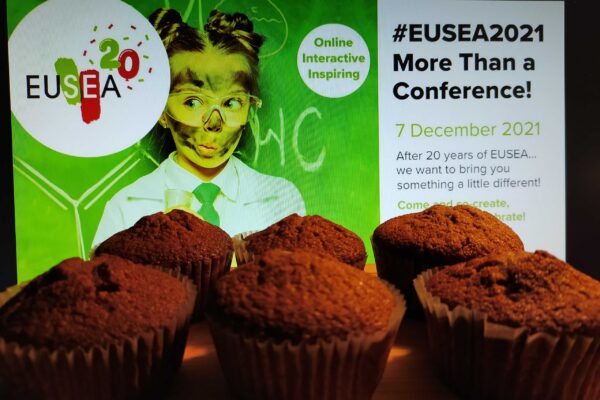
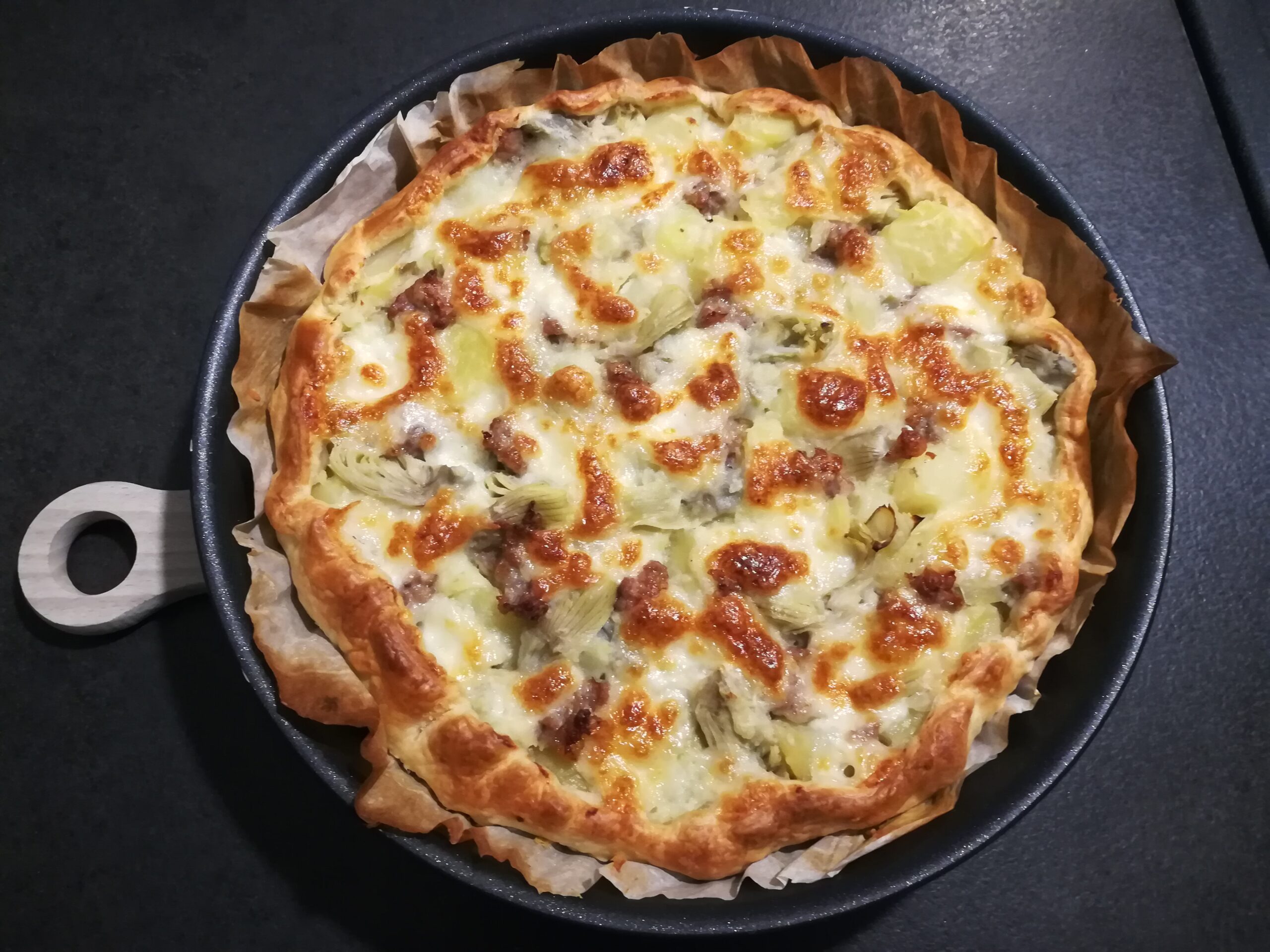
One memory stands out. For #EUSEA2021, More than a Conference, marking EUSEA’s 20th anniversary, the pre-conference included an interactive bake-off where we prepared a birthday cake together online. So there I was in my kitchen in Lyon, cooking a savoury artichoke quiche with my family. It may sound like a small detail, but I think it says a lot about EUSEA. Even in a difficult period, the network had a remarkable capacity to bring people together and create a real sense of community.
I also remember the moment I learnt I had got the job. After my interview, then Executive Director Annette Klinkert sent me a meeting invitation, and only during that meeting did I discover I would be joining the team. I was genuinely excited. I knew I would learn about citizen science, public engagement and different ways of involving people in research, while constantly exchanging with colleagues and practitioners from across Europe.
The experience lived up to those expectations. EUSEA gave me the chance to learn from a very diverse community and to understand science engagement in a much more concrete way. It also helped shape my professional path. I now work for the European Commission on science communication and science in society, and I am convinced my time at EUSEA helped bring me here.
The challenges we face

Looking at science engagement today, I see some of the biggest challenges in inclusion, trust, and a changing information environment.
First, engagement that is meaningful has to be genuinely inclusive. We should not speak only to the usual suspects, or to audiences already close to research and scientific institutions. We need to make a real effort to involve people who feel distant from science, for social, economic, cultural or practical reasons. That cannot be occasional or tokenistic. Sometimes I worry that public engagement risks becoming a buzzword or a tick-the-box exercise. It should be built into how we conceive research and science communication from the very beginning, and it requires practical thinking. If someone cannot take part because they lack internet access, because the format is inaccessible, or because they do not feel a project is meant for people like them, it is our responsibility to ask what can be changed.
The second challenge is trust. We live in a time of multiple crises, polarisation, declining trust in institutions and widespread mis- and disinformation. Trust cannot be built through one campaign or one event. It takes time, consistency and openness. It also means being honest about uncertainty: science is not a fixed body of answers but a process that evolves as evidence develops. Explaining this clearly is not always easy, but it is essential if we want people to understand why scientific advice can change without assuming that science has failed.
For me, these challenges are closely connected. Inclusive engagement helps build trust, and trust creates the conditions for more meaningful dialogue.
Learning across borders
Working with science engagement professionals from different countries taught me how much we share. From Iceland to Georgia, from Ireland to Poland, approaches differed enormously, but the underlying goal was often the same: creating a meaningful connection between science and society.
Science engagement professionals are often the bridge between researchers and different publics, helping research leave the ivory tower and making its relevance more visible and understandable. I sometimes feel this work is still undervalued, perhaps because the field is seen as a niche. Maybe it is, in some respects, but its importance is much broader. If research is publicly funded, affects people’s lives, or aims to respond to societal challenges, then the way we create dialogue around it matters enormously.
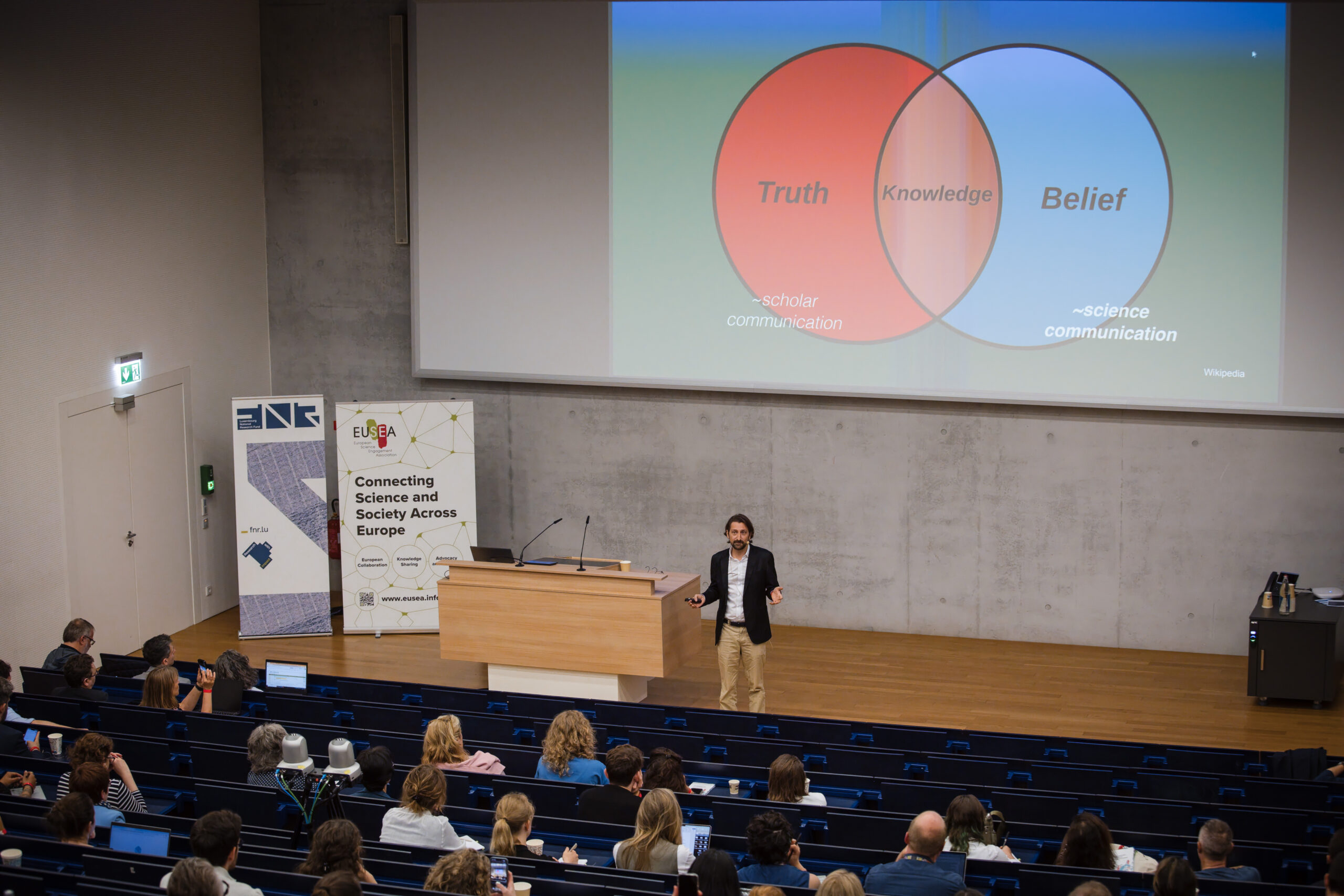
This is why international collaboration is so valuable. It lets us see what others are doing, learn from approaches tested elsewhere, and reflect on whether they might inspire something in our own context. It also teaches us that formats cannot simply be copied from one place to another. Different histories, institutions, levels of trust and social dynamics all matter. Even when an approach cannot be transferred directly, it can open up new ideas and make us question our own assumptions.
That is what I found so inspiring about EUSEA. I discovered initiatives already tested in other countries and could discuss them with the people who had actually implemented them. For me, that is the real value of a network like EUSEA: federating a community, nurturing exchange, and keeping the conversation going about why science engagement matters and how we can do it better.
Looking ahead
I think EUSEA is already doing many of the right things. The Science Engagement Platform, for example, is a very useful resource for practitioners, bringing together inspiration, methods, tools and examples for participatory and dialogue-oriented science communication.


At the same time, I hope EUSEA protects something less tangible but just as important: its family feel. It was one of the things I appreciated most when I worked there, and I think it sets EUSEA apart from other organisations working on similar topics. Members are not simply part of a professional network, but part of a community where people know each other, share experiences openly and are willing to learn from one another. Training, peer learning, informal conversations and, of course, the annual conference all keep that spirit alive. The conference in particular brings the network together in person, strengthens connections and shows what others are experimenting with.
I also see strong potential for EUSEA in advocacy. It could play an even greater role in shaping the future of science communication and public engagement at the European level. That would not mean changing its nature; quite the opposite. It would mean giving more weight to the diversity of voices that already make up the community, and helping them be heard more clearly in wider policy discussions.
The challenges facing science engagement are perhaps stronger than ever. We often hear that we live in a post-truth era, and it can be hard to know how to respond to polarisation, distrust or information disorder. That is why building bridges, creating synergies and thinking together about future-proof forms of science engagement matters so much. Networks like EUSEA give practitioners a place where they do not have to face these challenges alone. In that sense, continuing to build community is not only useful. For me, it can even be a small act of resistance.
Happy 25th birthday, EUSEA. Thank you for the quiche, the conversations, and the community.
Author:

Amalia Verzola
– Communications Project Manager and Writer, currently Policy Officer at the European Commission