I sometimes wonder what my professional life would have looked like without EUSEA.
When I first encountered the EUSEA family around 2004, I was working in city management in Germany, trying to strengthen the relationship between the city of Bielefeld and its academic institutions. I was convinced that science could play a much bigger role in urban development and in shaping a city’s identity, but I had very few examples to learn from. Then I discovered EUSEA.
Suddenly, there was a European community full of people experimenting with ideas that felt both inspiring and slightly crazy at the time: science festivals, science cafés, maker spaces, dialogue formats, collaborations between researchers, artists and citizens. Every conference felt like returning home with a suitcase full of new ideas.
Looking back, almost everything I developed in those early years was somehow connected to EUSEA. Our first one-week science festival, GENIALE, was inspired by Edinburgh’s Science Festival. The foundation of our Science Office in Bielefeld. The launch of the German FameLab competition, whose national finals are still held in Bielefeld today.

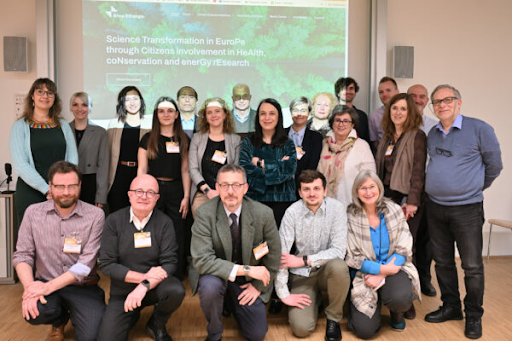
The 2022 EUSEA Board in Cork
Even the decision to found my own company, city2science, in 2012 was inspired by this community of colleagues. One of my first assignments as an entrepreneur was working for EUSEA on the PLACES project. Later, city2science became home to the EUSEA Office, and from 2016 until 2025, I had the honour of serving as Executive Director, working alongside amazing professionals and wonderful people on the EUSEA Board.
”What always impressed me about EUSEA was its generosity. Ideas were shared openly. Success was celebrated collectively. People genuinely wanted each other to evolve and co-create ideas which could then be shared again.
Today, Europe has many excellent networks working at the intersection of science and society. Yet EUSEA still occupies a special place for me because it never felt like a network of institutions. It still feels like a network of people united by curiosity, openness and a shared belief that science should be both a vital element of knowledge societies and deeply embedded in our cultures across and beyond Europe.

PLACES Cities of Scientific Culture
The evolving landscape of public engagement with science
When I joined EUSEA around 2004, much of our energy was focused on bringing science closer to “the public”. We organised festivals, science cafés and dialogue formats, often with a strong emphasis on STEM promotion and science communication. Over the years, the field matured. We moved from communication to engagement. Citizens became contributors rather than audiences.
One of the experiences that shaped my thinking most was the PLACES project, where we worked with 45 European cities exploring what a “City of Scientific Culture” could be. I remember seeing scientists, artists, policymakers and citizens working together on local challenges and urban futures. In a PLACES publication in 2014, I described cities as “living laboratories of ideas” — a phrase that still inspires my work today. What fascinated me was that engagement was no longer an activity. It had become part of innovation, decision-making and transformation.
Today, I believe we are entering another phase. Climate change, artificial intelligence, social cohesion and democratic participation require more than successful engagement projects. They require institutions that can learn, adapt and collaborate over the long term.
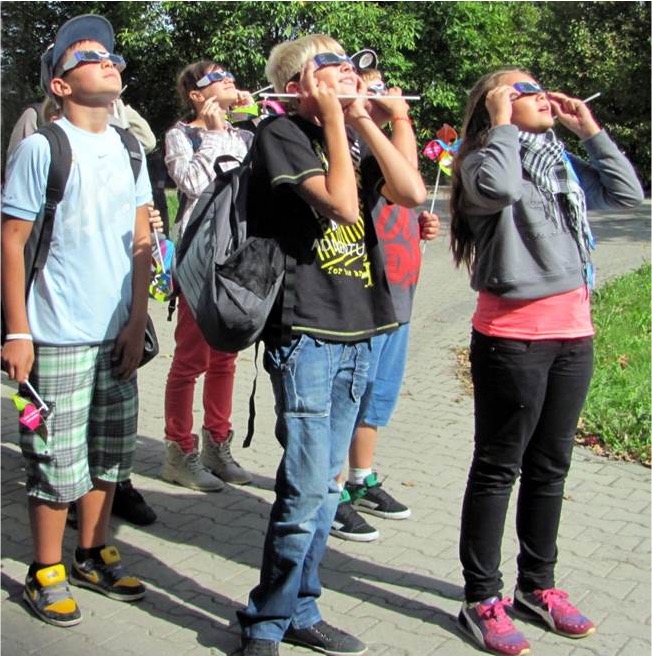
PLACES Cities of Scientific Culture
”We have become very good at creating projects. But projects often end before institutions begin to change. We know how to engage citizens. The question now is how engagement can help transform universities, cities and regions themselves.
For me, the next chapter of our field is no longer about communication or engagement alone, not even about creating “trust in science”. It is about strengthening resilience and capacity for transformation in a world of complexity.
What makes EUSEA so special?
What am I most proud of? The people.
Of course, I am proud of the projects, conferences and partnerships. But what has stayed with me are the friendships, the conversations over coffee and the ideas shared during “EUSEA HotPots” that later became real initiatives.
One symbolic moment for me was the decision to change EUSEA’s name from the European Science Events Association to the European Science Engagement Association in 2016. It may sound like a small adjustment, but for me it reflected how our field had evolved: from organising events to creating relationships.
I am proud that EUSEA has consistently evolved while staying true to its values. As new concepts emerged — citizen science, responsible research and innovation, co-creation and many others — EUSEA remained open, curious and willing to learn.

Lots of fun (and food) in Georgia for EUSEA24
One conference I will never forget took place in Georgia during politically turbulent times. Students were demonstrating for a European future, and the university openly supported them. The atmosphere was emotional, hopeful and deeply moving. It reminded me that public engagement is not only about methods. It is also about values: openness, dialogue, participation and academic freedom — values that Europe should never take for granted.
”For twenty-five years, EUSEA has brought people together across disciplines, sectors and countries — not only to share practices, but also to strengthen the values that underpin them.
Why you should join EUSEA
I would say there has never been a more interesting moment to join.
When I left my role as Director in 2025 to become Managing Director of the COLOURS European University Alliance, I entered a world focused on institutional transformation. Universities across Europe are rethinking how they collaborate, govern themselves and engage with society. What surprised me was how often I found myself returning to lessons I had learned through EUSEA.
At the same time, I realised something new: engagement and openness are essential, but they are not enough on their own. We can organise excellent engagement activities and still leave institutions unchanged. We can run successful projects and still struggle to build lasting partnerships.
The challenges ahead require universities, cities, regions, businesses, cultural organisations and citizens to work together as ecosystems of knowledge and decision-making. They require trust, but also shared responsibility and long-term collaboration. For this reason, I believe EUSEA’s next twenty-five years may be even more important than its first twenty-five.
If you join EUSEA, you will find inspiring colleagues, generous partners and a community that genuinely wants to learn together. But you will also join a conversation about the future: how science, society and institutions can work together to navigate an increasingly complex world. After more than twenty years in this community, I can honestly say that it is a conversation worth having.
”Happy 25th birthday, EUSEA. Thank you for the inspiration, friendships, opportunities and adventures along the way. I cannot wait to see what comes next!

Old and New EUSEA Directors
Author:

Annette Klinkert – Former EUSEA Director