In the first of our series of birthday blogs to mark 25 Years of the European Science Engagement Association, we turned to EUSEA’s very first President, Joachim Lerch and General Secretary, Peter Rebernik, for their recollections and reflections on those early days, and why a network dedicated to science communication and events was so timely.
Bringing together an emerging community
Back in the 1990s, when our journey into science communication was at the early stages, the idea of communicating was largely equated with press relations. The prevailing belief was that if we simply provided people with enough information, they would understand why science matters. Looking back, this was a very linear understanding of communication and somewhat of a one-way street from science to society. The desired impact rarely materialised. Communication, after all, thrives on dialogue, on listening, and on mutual learning.
Against this backdrop, Joachim and colleagues in Freiburg took a new step in 2000 and initiated the first German Science Festival, inspired by the Edinburgh Science Festival, which had already demonstrated since 1989 how powerful direct encounters with science could be. The aim was to create spaces where science and society could meet on equal footing. The fact that, for more than 25 years, this format has engaged many thousands of people in dialogue every year continues to confirm that this was the right path to take.

The shaping of a new network
At the same time, similar festivals to the German model were emerging in a few European countries. From early on, there was a strong desire to connect with colleagues across borders – to exchange experiences, learn from one another, and jointly develop new ideas. Following initial meetings in Freiburg and later in Gothenburg, the idea emerged to formalise this collaboration, ideally within the framework of a joint EU project.
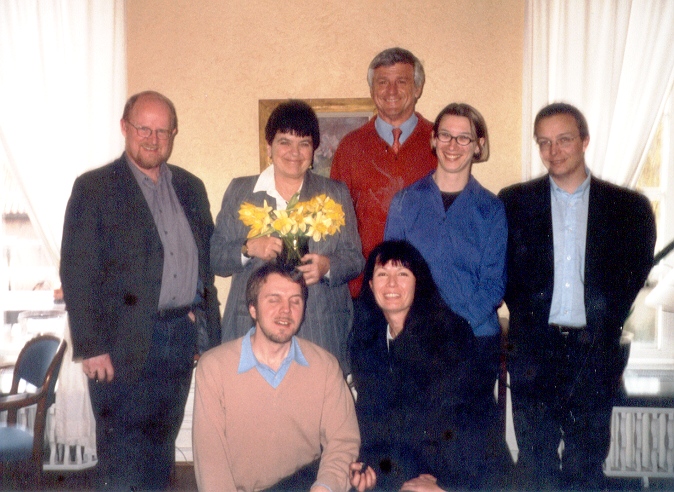
One of the central outcomes of this project was the founding of EUSCEA, the European Science Events Association, as it was then called. The founding event took place in Vienna in 2001. Besides the two of us, representing Germany and Austria, the founding team included Annika Lotzman-Dahl (Sweden), Magdalena Fikus (Poland), Janneke Voltman (the Netherlands), and Mikkel Bohm (Denmark). The project received EU funding – an important signal that science communication was increasingly being recognised as a matter of public and political relevance.
We are proud to have been involved at the very beginning of this wonderful endeavour.
From events to engagement – tackling the big issues head on
Since the founding of EUSCEA, the field of science communication has evolved significantly. The long-dominant deficit model has increasingly been questioned and complemented by dialogical approaches – extending to forms of engagement and genuine participation. This shift was also reflected in the further development and renaming a decade ago of EUSCEA to EUSEA – ‘events’ becoming ‘engagement’. Today, EUSEA is a key actor in European science engagement and an important space for exchange, reflection, and collective development.
Looking ahead, we once again face profound changes. Artificial intelligence, digital public spheres, and growing societal polarisation pose new challenges for science communication. Several developments are becoming clear.
Firstly, dialogical approaches will continue to gain importance – and will increasingly become political, whether we want them to or not. As a result, science will need to be communicated more openly as a process, rather than as an infallible truth machine. Communication will become more targeted: not maximum reach, but relevant reach will be the key measure of success.

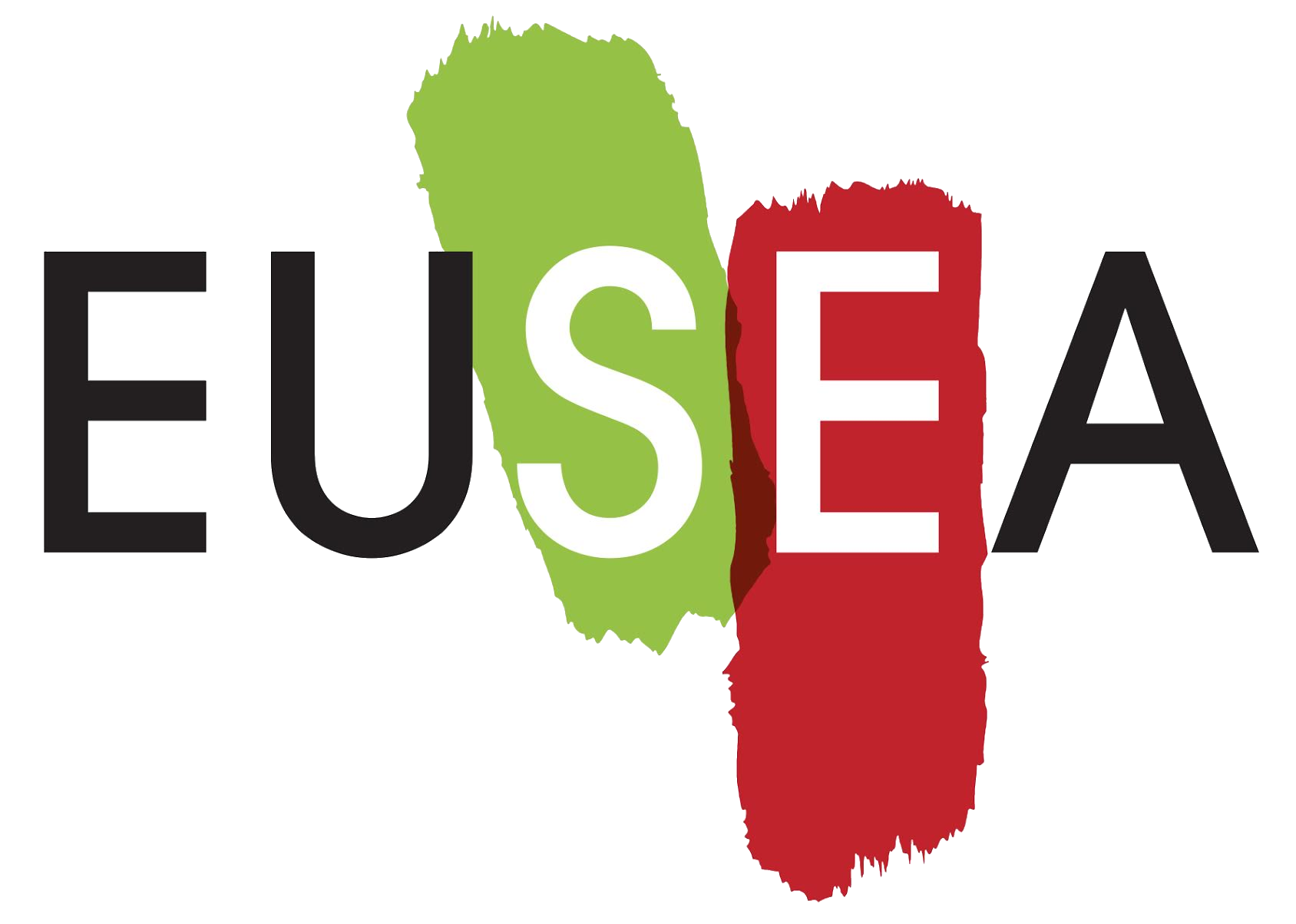
The first logo for the European Science Events Association, as it was then called.
Encounters between scientists and citizens remain essential – especially in polarised times, whether in physical or digital spaces. It is also likely that science communication will continue to professionalise and extend far beyond traditional journalism. At the same time, more research on science communication is needed, including within universities. Perhaps most pressing in current times, demands and expectations on science communication will increase as democracies themselves come under pressure. Science must explain more clearly than ever why it is relevant, why it requires resources, and why its methods, ethos and expertise deserve trust.
Looking Back with Pride
What makes us most proud of EUSEA and the way it has evolved since the early days is how a small idea turned into a strong and genuinely European community. There was no grand strategy at the beginning – just a shared feeling that science communication had to be more than passing on information, and that real encounters and exchange really matter.

One memorable project that stands out for us is WONDERS, which stood for “Welcome to Observations, News and Development of European Research in Science”. It was a kind of carousel of science communication in which each member visited another to share their science communication activities. The host again was sent to another member and so forth. As we recall, the project started with about 21 members growing to more than 30 members taking part from all over Europe by 2007.
We’re proud that EUSEA has held on to this spirit over the years. Even as the field has changed, the organisation has stayed open: to new formats, new topics, new countries, and new generations of people working in science communication. EUSEA has never felt like a network for its own sake, but rather a place where people can share experiences honestly and develop ideas together.
What we especially appreciate is how EUSEA has grown alongside science communication itself. Starting with a strong focus on events and festivals, it has gradually embraced broader principles of dialogue, engagement, and participation—without losing the importance of meeting people face-to-face.
The European dimension has always been one of EUSEA’s great strengths. At a time when debates often become national and polarised, EUSEA continues to show the value of learning from different contexts and perspectives across borders.
Above all, EUSEA is about people. The commitment, curiosity, and passion that so many have brought to the community over the years are what keep it relevant and alive.
When we look at EUSEA today, we don’t just see an organisation with a long history – we see a community with a future. And that fills us with real joy.

A family worth joining…
On being part of the EUSEA members network, we would say: join if you are curious, open, and interested in learning from others. EUSEA is not just an organisation you sign up to – it’s a community you become part of.
If you work in science communication and care about dialogue and meaningful engagement with society, EUSEA offers a space to exchange ideas, learn from diverse perspectives, and develop new approaches. You don’t need to have all the answers; what matters is a willingness to share experiences openly.
For organisations, EUSEA provides a valuable European perspective beyond national contexts. It helps you see your work in a broader framework, connect with others, and build partnerships across borders.

What truly sets EUSEA apart is its open and collegial atmosphere. People are generous with their knowledge and genuinely interested in each other’s work.
So if you are looking for exchange rather than competition, and for a European community driven by both professionalism and passion for science communication, EUSEA is well worth joining.
Authors:

Joachim Lerch – EUSEA’s First President

Peter Rebernik – EUSEA’s First Director
A photo album of the gathering to vote on EUSEA’s first statutes is available here.