Competitive Edge:
Understanding the New European Commission Funding Landscape
On 16 December, we hosted the third session of our Public Engagement Hotspots—an online forum where community members come together to exchange ideas, share challenges, and explore emerging issues in science communication and public engagement.
This webinar offered a clear and practical overview of European Commission funding schemes, including updates on Horizon Europe, as well as evolving expectations around the democratisation of science and impact measurement. Whether you are a seasoned grant writer or new to the process, a strong understanding of EC funding schemes is essential to staying competitive in the increasingly crowded European research landscape.
The session was moderated by EUSEA Board Member Maria Hagardt, who was joined by this month’s chefs:
Who is in the kitchen?
Maria Hagardt
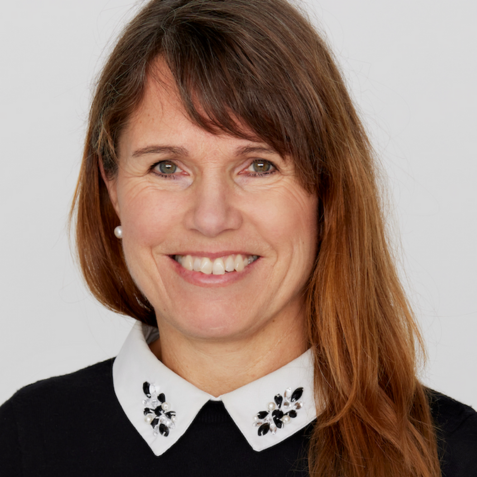
Maria Hagardt is Senior Research Officer at the International Secretariat of the Swedish Research Office, where she coordinates and helps shape future European Research Area Policy Agenda and EU R&I Framework Programmes with a specific focus on public engagement and building trust in science. Her extensive experience includes roles as International Relations Manager at Public & Science Sweden and as a National Contact Point for EU Horizon 2020 and FP7. She is a member of EU reference groups for the EU Horizon Europe WIDERA programme and a national expert in the European Commission’s Mutual Learning Exercise on Public Engagement.
Helen Garrison
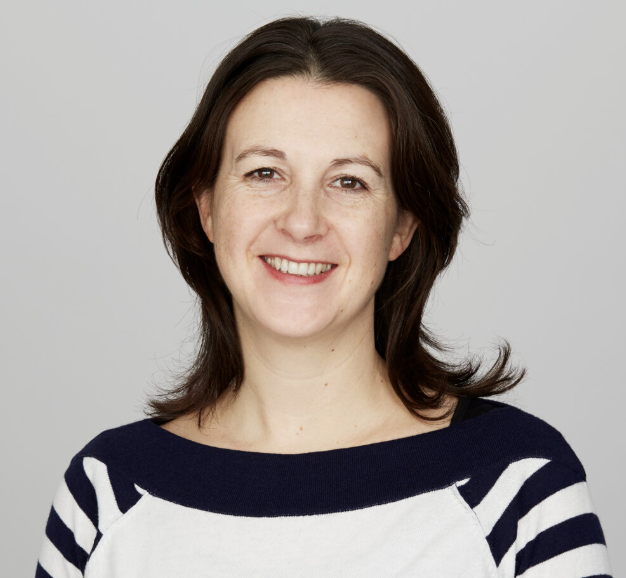
Helen Garrison is a Project and Communications Manager at Vetenskap & Allmänhet (Public & Science), a Swedish non-profit organisation that promotes openness and dialogue between researchers and the public. With over 20 years’ experience in science communication and public engagement, she has worked on 11 EU-funded projects for Public & Science, where societal engagement is central. In addition to managing EU projects, she contributes to developing new collaborations and funding proposals. Helen’s background also includes roles at the British Council in Sweden and the Department for Education and Skills in the UK. Public & Science has been working on EU-funded projects since 2009 and has experience from 23 projects to date, including co-ordinating European Researchers’ Night in Sweden.
Georgios Papanagnou
Dr. Papanagnou is a Policy Officer on Open Science and Public Engagement in R&I at the European Commission, with a background spanning UNESCO, academia, and DG Research & Innovation. His work focuses on participation, democracy, and fairness in science and innovation, and he holds a PhD in Political Science.
Keeping with the food theme- as always- here are some of the “takeaways” from this discussion:
This EUSEA online session brought together practitioners, policymakers, and researchers to explore the European Commission’s evolving approach to competitiveness, open science, and citizen engagement in research and innovation (R&I). The event combined policy insight from the European Commission with practical experience from EU-funded projects, offering participants a forward-looking perspective on funding opportunities, strategic positioning, and public engagement in the 2026–2027 period.
European Commission Competitive Edge Discussion
The meeting opened with welcomes and an overview of the session format, including short presentations followed by discussion. Chris Styles outlined the structure of the event and introduced the speakers.
The session featured:
-
Dr. Georgios Papanagnou, Policy Officer on Open Science and Public Engagement in Research & Innovation at the European Commission, with a professional background spanning UNESCO, academia, and DG Research & Innovation;
-
Helen Garrison, Project and Communications Manager at Vetenskap & Allmänhet (Public & Science); and
-
Maria Hagardt, Senior Research Officer at the International Secretariat of the Swedish Research Office.
The discussion focused on competitiveness in EU research funding and the changing policy and funding landscape of the European Commission. Chris concluded the opening remarks by welcoming participants and inviting Maria to deliver the first presentation.
EUSEA and EU Initiatives
Maria Hagardt presented an overview of EUSEA’s role in EU funding, policy processes, and public engagement initiatives. She highlighted EUSEA’s long-standing engagement in European projects, including initiatives such as Two Ways and its involvement in chairing the European Commission’s Mutual Learning Exercise on Public Engagement. Maria emphasized the importance of strategic frameworks, capacity building, and knowledge exchange to strengthen public engagement across Europe. She also outlined ongoing and forthcoming EU proposals, including the Empathus project and the Trust in Science initiative. The session then transitioned to Dr. Georgios Papanagnou, who introduced key elements of the Horizon Europe work programme.
Citizen Engagement in Research and Innovation
Dr. Georgios Papanagnou presented priorities within the Horizon Europe work programme for the coming two years, focusing on citizen engagement in research and innovation (R&I). He outlined two main areas:
-
citizen science as a mechanism to support policymaking and democratic governance, and
-
guiding principles for inclusive and meaningful citizen engagement.
He also discussed mechanisms and funding schemes to support sustainable citizen participation, alongside initiatives aimed at strengthening scientific literacy, youth engagement in science and democracy, and scaling up public engagement at EU level. A core objective is to enhance trust in science through citizen engagement and to build a European community of practice involving member states.
2026–2027 Research Funding Overview
The discussion moved to upcoming funding opportunities for 2026–2027, with Georgios explaining the role of Coordination and Support Actions (CSAs). These actions aim to coordinate research and policy communities rather than fund original research. In response to questions about European university alliances, Georgios noted that while alliances may participate within consortia, they are unlikely to apply independently. Concerns were raised about the relatively limited €2 million budget, to which Georgios clarified that CSAs focus on synthesising existing evidence, building frameworks, and supporting policy objectives. Expectations for citizen science projects were also discussed, with an emphasis on taking stock of existing evidence and developing mechanisms to integrate citizen science into democratic policymaking.
EU Project Experience and Strategy
Helen Garrison, Project and Communications Manager at Vetenskap & Allmänhet (Public & Science), shared insights from the organisation’s extensive experience in EU-funded projects. Since 2009, the organisation has participated in 23 EU projects across multiple funding programmes. Helen highlighted their role in fostering openness and dialogue between researchers and the public, frequently contributing as work package leaders, task leads, or third-party participants. She outlined their strategic approach to project selection, considering alignment with organisational priorities, added value, and the quality of the consortium. The importance of networking, national and international partnerships, and resources such as the EU Funding and Tenders Portal and National Contact Points (NCPs) was also emphasized.
EU Research Funding and Competitiveness
A panel discussion explored the concept of competitiveness in EU research funding. Georgios described competitiveness as closely linked to innovation and economic impact, while participants noted a perceived shift in recent policy documents from open science towards competitiveness. Maria suggested that competitiveness can also involve diversifying expertise and building strong, interdisciplinary consortia, and reflected on how funding for science communication has evolved across successive European framework programmes. The session concluded with Chris Styles announcing upcoming EUSEA training activities in 2026, including sessions on EU grant writing and the use of AI tools, and inviting participants to contribute ideas for future training topics.
2025 Achievements and 2026 Opportunities
The meeting closed with reflections on achievements in 2025, including successful community events and organisational developments, alongside seasonal well-wishes. Chris highlighted upcoming opportunities for 2026, such as new training sessions on AI tools for EU funding and proposal writing, an additional EU funding training planned for March, and the Inspiring ERA Citizen Engagement online event in January. He also mentioned the EUSEA 26 call for proposals, which closed in December, and the launch of a new EUSEA Marketplace pilot enabling public engagers to share services and products. Participants were encouraged to consider EUSEA membership for reduced rates on trainings and the annual conference. Maria closed by stressing the importance of remaining actively engaged with the evolving EU funding landscape. The meeting concluded with a reminder that all presentations would be shared via Padlet and the EUSEA website, along with a follow-up post summarising key points and links.
Participants were invited to share their thoughts, and questions on the following Padlet. If you would like to see or add to this board, please click here.
And if you want to catch up on the full discussion, you can watch the entire thing below.